
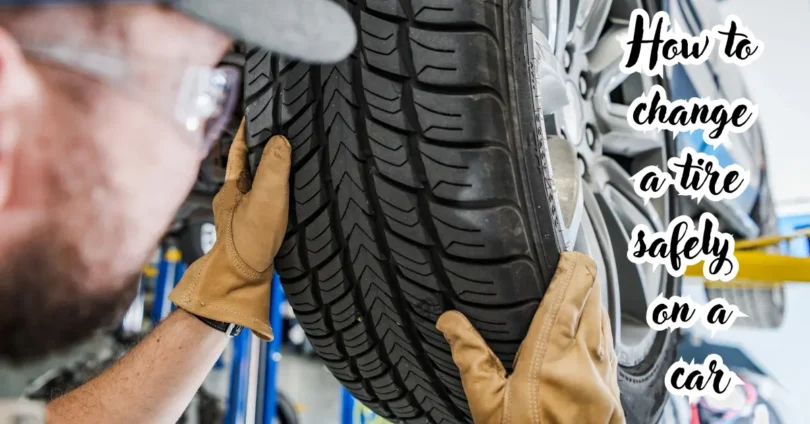

Introduction
How to change a tire is an important basic vehicle skill that can help you deal with a flat tire when you are away from a repair shop. The process involves safely securing the vehicle, loosening the lug nuts, lifting the vehicle with the correct equipment, removing the damaged wheel, installing the spare, and checking everything before driving away.
However, changing a tire is not simply a matter of removing one wheel and putting another one on. A vehicle can be heavy and unstable when lifted, especially on an unsuitable surface. Safety should always come before speed.
This guide explains how to change a tire in a clear, practical way for drivers in the USA. You will learn what tools you need, how to prepare your vehicle, how to install a spare tire, what mistakes to avoid, and when it is safer to contact roadside assistance or a professional mechanic.
If your vehicle is stopped in a dangerous location, traffic is moving close to you, visibility is poor, or you do not have the correct equipment, do not attempt the repair. Move to a safe location if possible and seek professional roadside assistance.
What Does Changing a Tire Mean?
Changing a tire means removing a damaged or flat wheel-and-tire assembly from a vehicle and replacing it with a spare or another properly fitted wheel.
For a roadside emergency, drivers commonly install a temporary spare tire, often called a “donut.” Some vehicles instead have a full-size spare, while others do not include a spare at all and rely on a tire repair kit or roadside assistance.
A tire change is different from repairing or replacing the tire itself at a tire shop. A roadside tire change usually gets the vehicle mobile again temporarily. The damaged tire should normally be inspected by a qualified tire professional before deciding whether it can be repaired or needs replacement.
When Should You Change a Tire?
You should consider changing the tire when it has a serious loss of air pressure or is visibly damaged and continuing to drive could create a safety problem.
Common signs of a flat or damaged tire include:
- The tire appears significantly deflated.
- The vehicle pulls or feels unstable.
- You hear unusual thumping or flapping sounds.
- The tire-pressure monitoring system indicates low pressure.
- You notice visible damage to the tire.
- The vehicle has a puncture and cannot safely maintain pressure.
If you experience a flat while driving, reduce speed gradually and look for a safe place to stop. Avoid sudden steering or braking unless necessary to prevent an immediate collision.
If the tire is completely flat, driving on it for an extended distance can damage the tire and potentially the wheel.
What You Need to Change a Tire
Before attempting how to change a tire, make sure you have the appropriate equipment.
ExampleEssential Tire-Changing Equipment
Most vehicles that include a spare tire are supplied with some of the basic equipment needed for a roadside change.
You may need:
- A properly inflated spare tire
- Vehicle jack
- Lug wrench
- Wheel chocks
- Gloves
- Flashlight
- Reflective warning equipment
- Owner’s manual
A tire-pressure gauge can also be useful for checking the spare before driving.
The exact jack and lifting points vary by vehicle. Always check the owner’s manual for the manufacturer’s instructions rather than assuming that any location underneath the vehicle is suitable for the jack.
Check Your Spare Tire Before an Emergency
A spare tire is not useful if it is missing, damaged, or severely underinflated.
Periodically check:
- Spare-tire inflation
- Spare-tire condition
- Jack and lug wrench
- Jack handle or related hardware
- Location of the vehicle’s lifting points
- Whether your vehicle has a tire-pressure monitoring system
Some modern vehicles do not include spare tires, so check your vehicle before assuming one is available.
How to Change a Tire Step by Step
The following process explains the general procedure. Your vehicle manufacturer’s instructions should take priority because jack points, spare-tire systems, wheel hardware, and temporary-spare limitations can vary.
1. Find a Safe Place to Stop
The first step is not removing the wheel. It is getting yourself and the vehicle into a safe position.
If you notice a flat tire while driving, slow down gradually and look for a safe place away from moving traffic.
Whenever possible, stop on:
- Firm, stable, level ground
- A location away from traffic
- A well-lit area
- A place with enough room around the vehicle
Avoid attempting a tire change on soft ground, steep slopes, unstable shoulders, or locations where passing traffic could strike you.
If you are stopped on or near a busy roadway and cannot safely get away from traffic, calling roadside assistance may be the better option.
2. Turn on the Hazard Warning Lights
Turn on your vehicle’s hazard warning lights after stopping.
They help alert other drivers that your vehicle is stationary or experiencing a problem.
If you have appropriate reflective warning equipment, use it according to local safety guidance and your vehicle manufacturer’s recommendations.
Do not place yourself in traffic simply to set up warning equipment.
3. Secure the Vehicle
Put the vehicle in Park if it has an automatic transmission. For a manual transmission, follow the manufacturer’s recommended procedure, generally selecting an appropriate gear.
Apply the parking brake.
Turn the engine off before beginning the tire change.
The vehicle should remain as stable as possible before it is lifted.
4. Get the Spare Tire and Tools
Locate the spare tire, jack, and lug wrench.
Depending on the vehicle, these may be stored:
- Under the cargo floor
- Inside the trunk
- Beneath the vehicle
- In a dedicated storage compartment
Check the owner’s manual if you cannot find them.
Before continuing, make sure the spare appears to be in usable condition.
5. Loosen the Lug Nuts Before Raising the Vehicle
Use the lug wrench to loosen the lug nuts while the vehicle is still on the ground.
Do not completely remove them yet.
The purpose of loosening them first is to prevent the wheel from rotating while you are trying to break the nuts loose.
If a lug nut will not loosen with normal hand pressure using the correct tool, do not improvise with unsafe methods or damaged equipment. Consider getting professional assistance.
6. Position the Jack Correctly
This is one of the most important steps in learning how to change a tire.
Place the jack only at the lifting point specified by your vehicle manufacturer.
The correct location is normally identified in the owner’s manual and may also be marked on the vehicle.
Never place the jack wherever it looks convenient.
The wrong lifting point can damage vehicle components or create an unstable lifting situation.
7. Raise the Vehicle Carefully
Operate the jack according to the manufacturer’s instructions.
Raise the vehicle only as much as necessary for the damaged wheel to clear the ground.
Keep your body away from underneath the vehicle.
Never place any part of your body beneath a vehicle that is supported only by a jack.
A vehicle jack is designed for lifting the vehicle for a tire change, not for supporting a vehicle while someone works underneath it.
8. Remove the Lug Nuts
Once the tire is slightly off the ground and the lug nuts have been loosened, remove them carefully.
Keep the lug nuts together so they do not become lost.
Some vehicles use special wheel nuts or locking lug nuts, so make sure you have the required key or adapter if applicable.
9. Remove the Flat Tire
Hold the wheel securely and pull it straight away from the vehicle.
Tires and wheels can be heavier than they appear, so use controlled movements.
If the wheel does not come off easily, do not use excessive force or strike vehicle components. Consult the manufacturer’s instructions or seek professional help.
Place the damaged wheel in a secure location where it cannot roll into traffic.
10. Install the Spare Tire
Align the spare wheel with the vehicle’s wheel mounting points.
Carefully push the spare into position.
Start each lug nut by hand and make sure it engages correctly.
Do not force a lug nut if the threads do not line up. Cross-threading can damage the wheel studs or lug nuts and may create a serious safety problem.
11. Tighten the Lug Nuts by Hand
Once the spare is positioned, tighten the lug nuts by hand.
Tighten them gradually in a crisscross or star pattern when the wheel design allows it.
This helps seat the wheel evenly against the mounting surface.
Do not fully tighten the nuts using excessive force while the vehicle is still raised unless your vehicle’s instructions specifically call for a particular procedure.
12. Lower the Vehicle Carefully
Use the jack according to the manufacturer’s instructions to lower the vehicle until the tire contacts the ground and the vehicle is stable.
Then remove the jack if appropriate.
Do not put yourself under the vehicle while lowering it.
13. Tighten the Lug Nuts Properly
After the vehicle is safely back on the ground, tighten the lug nuts using the appropriate method and torque specification provided by the vehicle manufacturer.
A torque wrench is the preferred tool for achieving the manufacturer’s specified torque.
The correct torque is vehicle-specific, so do not rely on a generic number.
If you do not have a torque wrench or are uncertain about the correct torque specification, drive only as appropriate to reach a safe service location and have the wheel checked as soon as possible.
14. Check the Spare Tire
Before driving away, inspect the installation.
Make sure:
- The wheel appears properly seated.
- The lug nuts are installed.
- The spare tire has appropriate inflation.
- The jack and tools are stored safely.
- The damaged tire is secured.
- Nothing is left on the road.
- The vehicle’s warning lights or tire-pressure indicators are understood.
If the vehicle has a temporary spare, check the restrictions printed on the tire and in the owner’s manual.
Temporary Spare vs. Full-Size Spare
Not every spare tire is designed for the same purpose.
| Type | Main Purpose | Important Consideration |
| Temporary spare | Short-term emergency use | Follow speed and distance restrictions |
| Full-size spare | More similar to normal wheel | Still check inflation and compatibility |
| Tire repair kit | Temporary puncture response on supported tires | Not suitable for every type of damage |
| No spare | Requires alternative solution | Roadside assistance may be necessary |
What Is a Donut Spare?
A donut spare is a smaller temporary tire designed to help you reach a repair facility after a flat.
It is not necessarily intended to function like your normal tire.
If your vehicle has a donut spare, follow the specific speed, distance, and handling instructions provided by the tire and vehicle manufacturer.
Do not assume that a temporary spare can be driven indefinitely.
What to Do After Changing the Tire
Learning how to change a tire is only part of the process. You also need to deal with the original tire.
If the tire has a repairable puncture, a qualified tire professional can determine whether it can be safely repaired.
If the tire has serious damage, excessive wear, or another condition that makes repair inappropriate, it may need to be replaced.
Get the Original Tire Inspected
Take the damaged tire to a reputable tire shop or qualified service professional.
They can inspect:
- Tread condition
- Puncture location
- Sidewall damage
- Internal damage
- Tire age and condition
- Inflation-related damage
Do not assume that a visible puncture is the only problem.
Common Mistakes When Changing a Tire
Many roadside tire problems become more dangerous because of mistakes during the process.
Using the Jack on an Unsafe Surface
A jack needs a stable lifting environment.
Soft soil, loose gravel, steep slopes, and unstable surfaces can create problems.
If you cannot establish a safe setup, roadside assistance is a better option.
Choosing the Wrong Jack Point
Vehicle manufacturers design specific lifting points.
Using an incorrect point can damage the vehicle or make the jack unstable.
Always consult the owner’s manual.
Getting Under the Vehicle
Never place your body underneath a vehicle supported only by a jack.
A tire change does not require you to work underneath the vehicle.
Forgetting to Tighten the Lug Nuts
A wheel must be properly secured before driving.
After installation, make sure the lug nuts are tightened according to the manufacturer’s instructions.
Driving Too Far on a Temporary Spare
A temporary spare is designed for emergency use.
Follow the restrictions printed on the spare and listed in your owner’s manual.
Ignoring Tire Pressure
A spare tire can lose pressure while sitting unused.
Check its pressure before relying on it.
Continuing to Drive on a Flat Tire
Driving on a flat tire can cause additional damage.
If you experience a flat, stop as soon as it is safe to do so.
Losing the Lug Nut Key
Vehicles equipped with locking lug nuts may require a special key.
Keep that key with the vehicle’s tire-changing equipment.
How Long Does It Take to Change a Tire?
For someone familiar with the vehicle and working in a safe location with the correct equipment, a basic spare-tire change may be completed relatively quickly.
However, there is no universal time that applies to every situation.
Factors include:
- Your experience
- Vehicle design
- Location
- Weather
- Available equipment
- Type of spare tire
- Condition of the wheel hardware
- Whether the lug nuts are difficult to remove
Safety is more important than finishing quickly.
If something does not look or feel right, stop and get assistance.
How to Change a Tire in Bad Weather
Rain, snow, darkness, heat, and strong winds can make a roadside tire change more difficult.
Visibility may be reduced, the ground may become slippery, and traffic may be harder to see.
If weather conditions make the repair unsafe, consider contacting roadside assistance instead.
If you are in a safe location and must handle the situation yourself, use appropriate visibility equipment, keep your tools organized, and avoid rushing.
How to Change a Tire at Night
A flat tire at night can be particularly challenging because drivers may have difficulty seeing you.
Use your hazard lights and, where appropriate, reflective safety equipment.
A flashlight or headlamp can help you see the wheel and tools, but lighting does not make an unsafe roadside location safe.
If traffic is close to your vehicle or you are unsure whether you can safely perform the repair, contact roadside assistance.
What If Your Car Does Not Have a Spare Tire?
Many modern vehicles may use alternative systems instead of a traditional spare.
Depending on the vehicle, you may have:
- Run-flat tires
- A tire inflation kit
- A sealant system
- Roadside assistance coverage
Check the owner’s manual to understand what your vehicle is equipped with.
Do not assume that a sealant or inflation kit can repair every type of tire damage.
Severe sidewall damage, certain punctures, and other conditions may require professional service.
When Should You Call Roadside Assistance?
Knowing when not to change a tire yourself is just as important as knowing how to change a tire.
Call roadside assistance when:
- The vehicle is stopped in an unsafe traffic location.
- You do not have the correct jack or tools.
- The vehicle is on unstable or steep ground.
- You cannot identify the proper jack point.
- The wheel hardware is damaged or cannot be safely removed.
- The spare is missing or unusable.
- Weather makes the repair unsafe.
- You are uncomfortable performing the procedure.
- The vehicle has additional mechanical problems.
- The tire or wheel appears severely damaged.
Roadside assistance can provide a safer solution than attempting a repair in a dangerous location.
Tips for Preventing Flat Tires
You cannot prevent every puncture, but regular tire care can help identify problems before they become emergencies.
Check Tire Pressure Regularly
Use the vehicle manufacturer’s recommended pressure rather than relying on the number printed on the tire sidewall as your normal target.
The recommended vehicle pressure is commonly listed on the driver’s door-jamb label or in the owner’s manual.
Inspect Your Tires
Look for:
- Uneven tread wear
- Visible damage
- Bulges
- Cracks
- Embedded objects
- Unusual wear patterns
If you notice something concerning, have the tire inspected.
Rotate and Maintain Tires as Recommended
Follow the maintenance schedule provided by your vehicle and tire manufacturers.
Proper maintenance can help tires wear more evenly and can identify potential issues.
Check Your Spare
A spare tire should not be forgotten simply because you rarely use it.
Periodically verify its condition and inflation and make sure the necessary equipment is present.
How Technology Helps With Flat Tires
Although changing a tire is a physical task, modern vehicle technology can help drivers identify tire problems earlier.
Tire Pressure Monitoring Systems
Many vehicles sold in the USA use tire-pressure monitoring systems that alert drivers when tire pressure is significantly low.
A TPMS warning can provide an early indication that a tire needs attention.
However, the warning system does not replace physically checking the tires and maintaining proper inflation.
Smartphone Navigation
If you have a flat tire in a safe location, your smartphone can help you locate nearby tire shops, service stations, or roadside assistance providers.
Avoid using your phone while driving.
Vehicle Manufacturer Apps
Some connected vehicles offer roadside assistance features through their manufacturer’s mobile application or built-in system.
The exact features depend on the vehicle.
Benefits of Knowing How to Change a Tire
Knowing the basics of how to change a tire can provide several practical benefits.
Greater Preparedness
A flat tire can happen unexpectedly. Understanding the process means you are less likely to be completely unprepared.
Better Decision-Making
Even if you ultimately call roadside assistance, knowing the basic process helps you understand what equipment is required and why a particular situation may be unsafe.
Reduced Stress
Being familiar with your vehicle’s spare, jack, and lifting points can make a roadside emergency easier to manage.
More Efficient Roadside Assistance
If you need professional help, knowing what happened and where the vehicle’s spare equipment is located can make communication easier.
Learning How to Change a Tire is a useful skill for every driver. Knowing How to Change a Tire can help when a flat tire happens on the road. Before learning How to Change a Tire, always park in a safe place. A guide on How to Change a Tire can explain the basic tools and safety steps.
Understanding How to Change a Tire also means checking your vehicle manual first. When learning How to Change a Tire, make sure the vehicle is stable before working on it. Anyone researching How to Change a Tire should follow the instructions for their specific vehicle.
Learning How to Change a Tire can make unexpected tire problems easier to handle. If How to Change a Tire seems unsafe, contact roadside assistance. Overall, knowing How to Change a Tire is helpful for basic vehicle preparedness.
Limitations of Changing a Tire Yourself
Changing a tire is not always the best solution.
A spare may have restrictions, the damaged tire may have additional problems, and the vehicle could have another mechanical issue.
A roadside spare installation is generally a temporary solution rather than a substitute for proper tire inspection and maintenance.
If you have any doubt about the condition of the wheel, tire, or vehicle, seek professional assistance.
Learning How to Change a Tire is a useful skill for every driver. Knowing How to Change a Tire can help when a flat tire happens on the road. Before learning How to Change a Tire, always park in a safe place. A guide on How to Change a Tire can explain the basic tools and safety steps.
Understanding How to Change a Tire also means checking your vehicle manual first. When learning How to Change a Tire, make sure the vehicle is stable before working on it. Anyone researching How to Change a Tire should follow the instructions for their specific vehicle.
Learning How to Change a Tire can make unexpected tire problems easier to handle. If How to Change a Tire seems unsafe, contact roadside assistance. Overall, knowing How to Change a Tire is helpful for basic vehicle preparedness.
Frequently Asked Questions
1. How do you change a tire for the first time?
To change a tire, safely stop the vehicle, apply the parking brake, loosen the lug nuts, position the jack at the manufacturer’s approved lifting point, raise the vehicle, remove the damaged wheel, install the spare, lower the vehicle, and tighten the lug nuts according to the manufacturer’s specifications. Always prioritize safety and follow your owner’s manual.
2. Can I change a tire without a jack?
Normally, a conventional spare-tire change requires a suitable vehicle jack because the wheel must be lifted clear of the ground. Do not attempt improvised lifting methods. If your vehicle does not have the proper equipment, contacting roadside assistance is safer than trying to lift or support the vehicle with unsuitable objects.
3. How far can you drive on a spare tire?
The allowable distance depends on the type of spare and the vehicle. Temporary spare tires often have specific speed and distance restrictions printed on the tire and described in the owner’s manual. Follow those instructions rather than assuming a temporary spare can be used like a normal tire.
4. Should I replace the flat tire after installing a spare?
A spare is usually intended to provide temporary mobility rather than permanently replace the damaged tire. Have the original tire inspected by a qualified tire professional. Depending on the damage, the tire may be repairable or may require replacement. Do not continue using a damaged tire simply because the vehicle has a spare.
5. What should I do if I get a flat tire on a highway?
If possible, move to a safer location away from moving traffic and turn on the hazard warning lights. Do not attempt a roadside repair if your position exposes you to significant traffic danger. Contact roadside assistance or emergency services when necessary and follow the instructions provided by your vehicle manufacturer.
Learning How to Change a Tire is a useful skill for every driver. Knowing How to Change a Tire can help when a flat tire happens on the road. Before learning How to Change a Tire, always park in a safe place. A guide on How to Change a Tire can explain the basic tools and safety steps.
Understanding How to Change a Tire also means checking your vehicle manual first. When learning How to Change a Tire, make sure the vehicle is stable before working on it. Anyone researching How to Change a Tire should follow the instructions for their specific vehicle.
Learning How to Change a Tire can make unexpected tire problems easier to handle. If How to Change a Tire seems unsafe, contact roadside assistance. Overall, knowing How to Change a Tire is helpful for basic vehicle preparedness.
Final Thoughts on How to Change a Tire
Learning how to change a tire is a useful vehicle skill, but safety should always come first. The basic process involves finding a safe location, securing the vehicle, using the correct jack point, removing the damaged wheel, installing the appropriate spare, and properly securing the wheel before driving.
The most important lesson is that you should never rush a tire change simply to get back on the road. A safe location, correct equipment, proper lifting procedure, and manufacturer instructions matter more than speed.
Before your next trip, take a few minutes to check whether your vehicle has a spare tire, jack, lug wrench, and the necessary accessories. Learn where the approved jack points are and check the spare’s condition.
If you experience a flat tire and the situation is unsafe or you are unsure about the procedure, professional roadside assistance is the safer choice. Once the spare is installed, have the original tire inspected as soon as practical.
